

Summary
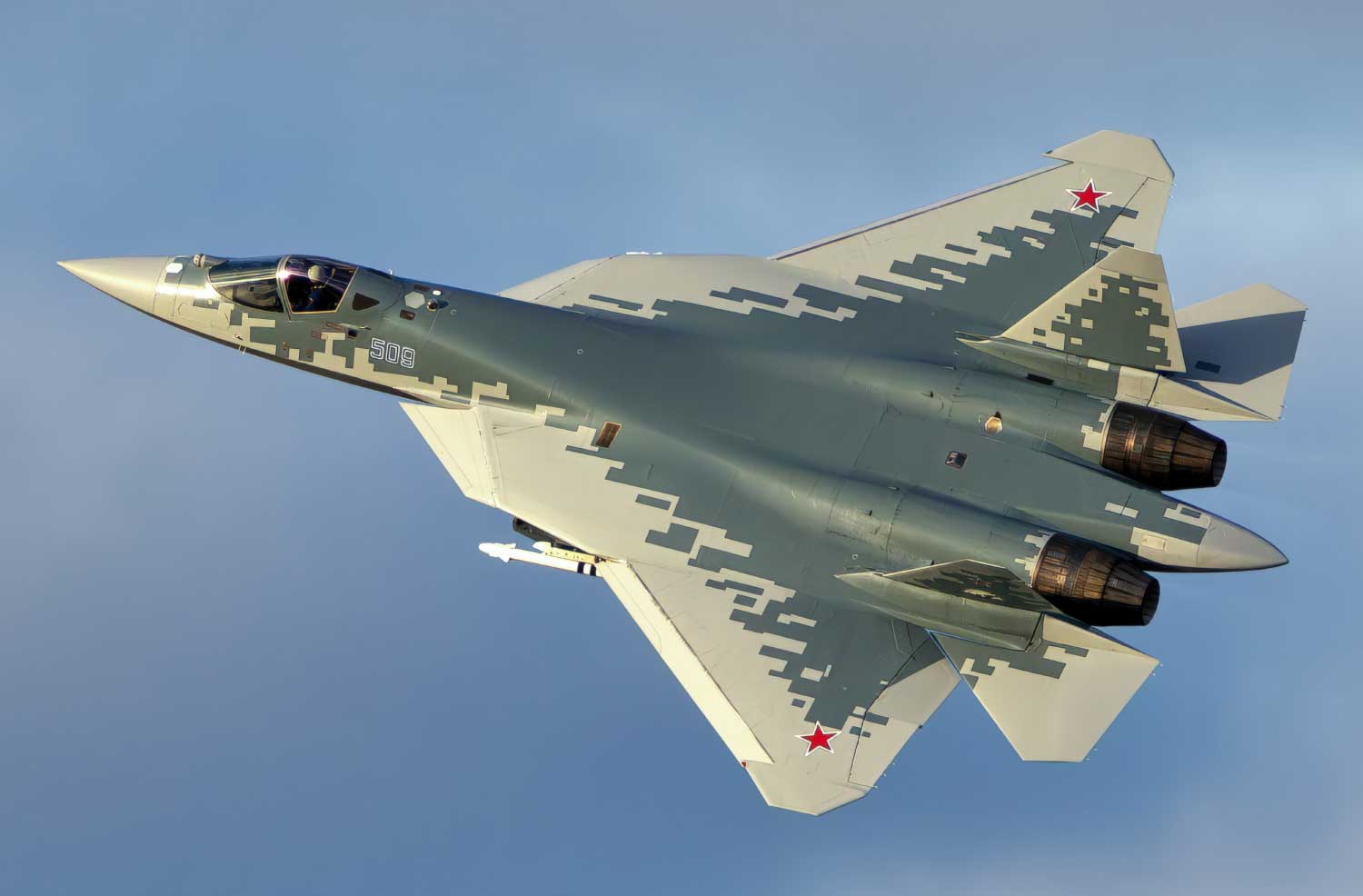
In early February 2026, Russia delivered its first annual batch of Su-57 Felons to the Russian Aerospace Forces. According to Rostec and UAC, the aircraft received feature a new technical configuration, with updated onboard systems and weaponry. This marks a visible restart after a confusing and unclear 2025 in terms of deliveries. However, we must be rigorous on the key point of the engine. At this stage, there is nothing in official Russian communications to suggest that the Su-57s delivered in February 2026 are already equipped with the Izdeliye 30 or AL-51F1 engine in operational service. The established fact is different: at the end of December 2025, a test Su-57 flew with a new engine presented as the Izdeliye 177, while the AL-51F1, often associated with the Izdeliye 30, remains shrouded in ambiguity and does not yet appear to be widely used on production aircraft. The real issue is therefore twofold: Moscow is revamping its fleet, but its Su-57 has still not reached the full industrial maturity it has been promising for years.
The first batch of 2026 revives a slowed-down program
On February 9, 2026, Russia announced the delivery of a new batch of Su-57s to the VKS. The official message is sober: the aircraft have received updated onboard systems and a modernized weapons complex. The exact number of aircraft has not been disclosed. This is an important detail, as the lack of transparency on volumes has become one of the program’s defining characteristics. The announcement does not change everything. Above all, it confirms that the production line is still running and that Moscow is keen to show industrial continuity despite sanctions, component constraints, and ramp-up difficulties.
The recent schedule for the Su-57 Felon remains irregular. Aggregated open sources estimate that by early 2026, Russia will have around 30 operational or quasi-operational aircraft, with prototypes excluded or partially included depending on the counting method. Russia’s official long-term goal remains the contract for 76 production aircraft, signed before the war in Ukraine, but the gap between stated ambitions and actual deliveries remains significant.
At the end of 2025, several analyses noted that no clearly documented deliveries had been announced during the year, or only a very small number, which contrasts sharply with the program’s initial objectives.
Frankly speaking, the February 2026 delivery does not prove that the program has emerged from its turbulence. It only proves that Russia refuses to let the Su-57 appear to be a semi-failure. That is an essential difference.